Physical Address
304 North Cardinal St.
Dorchester Center, MA 02124
Physical Address
304 North Cardinal St.
Dorchester Center, MA 02124
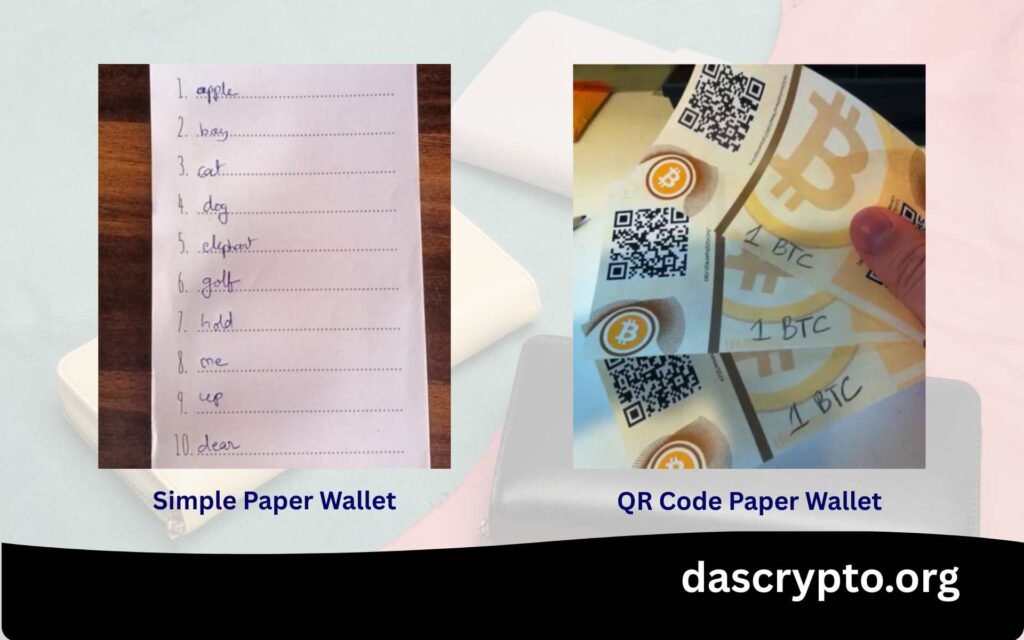
Paper Wallets are pieces of paper with your seed phrases written on them for easy recovery of your crypto wallet
A paper wallet is just a piece of paper where your passkeys, recovery seed phrases, or private keys are written. Paper wallets grew popular with the belief that they can help take your wallets offline, which then helps with unnecessary brute force attacks from hackers.
Paper Wallets are pieces of paper with your seed phrases written on them for easy recovery of your crypto wallet. They can help you take your private keys offline, preventing any unnecessary attacks.
These wallets can be created with just a piece of paper and a pen. However, they require safe physical storage so that no one can access your wallet.
Paper Wallets were conceptualized during the initial days of crypto, where attackers would simply use spyware to steal passkeys stored in a computer. Since these passkeys were mostly present in a text file, it was easy for them to spam your email with spyware and steal them.
Paper wallets solved the issue by taking the private keys offline. Since a private key is required to sign a transaction, when the wallet is turned off (or uninstalled after creating a paper wallet) they disable the wallet. Again, when the wallet is to be used, it is reinstalled or the device is switched on. Recovery phrases then help you restore your wallets.
Another reason why Paper Wallets became popular is that, unlike hardware wallets, these were available at no cost. Anyone could grab a piece of paper and create a wallet.
Further, several sellers also sell custom-printed templates for easy use.
These wallets became available worldwide because creating them requires no permission or regulatory approval. In contrast, hardware wallets have several restrictions placed on them in many countries.
Hardware wallets are considered the best because of their firmware design, anti-phishing features, ability to take keys offline, and several other reasons.