Physical Address
304 North Cardinal St.
Dorchester Center, MA 02124
Physical Address
304 North Cardinal St.
Dorchester Center, MA 02124

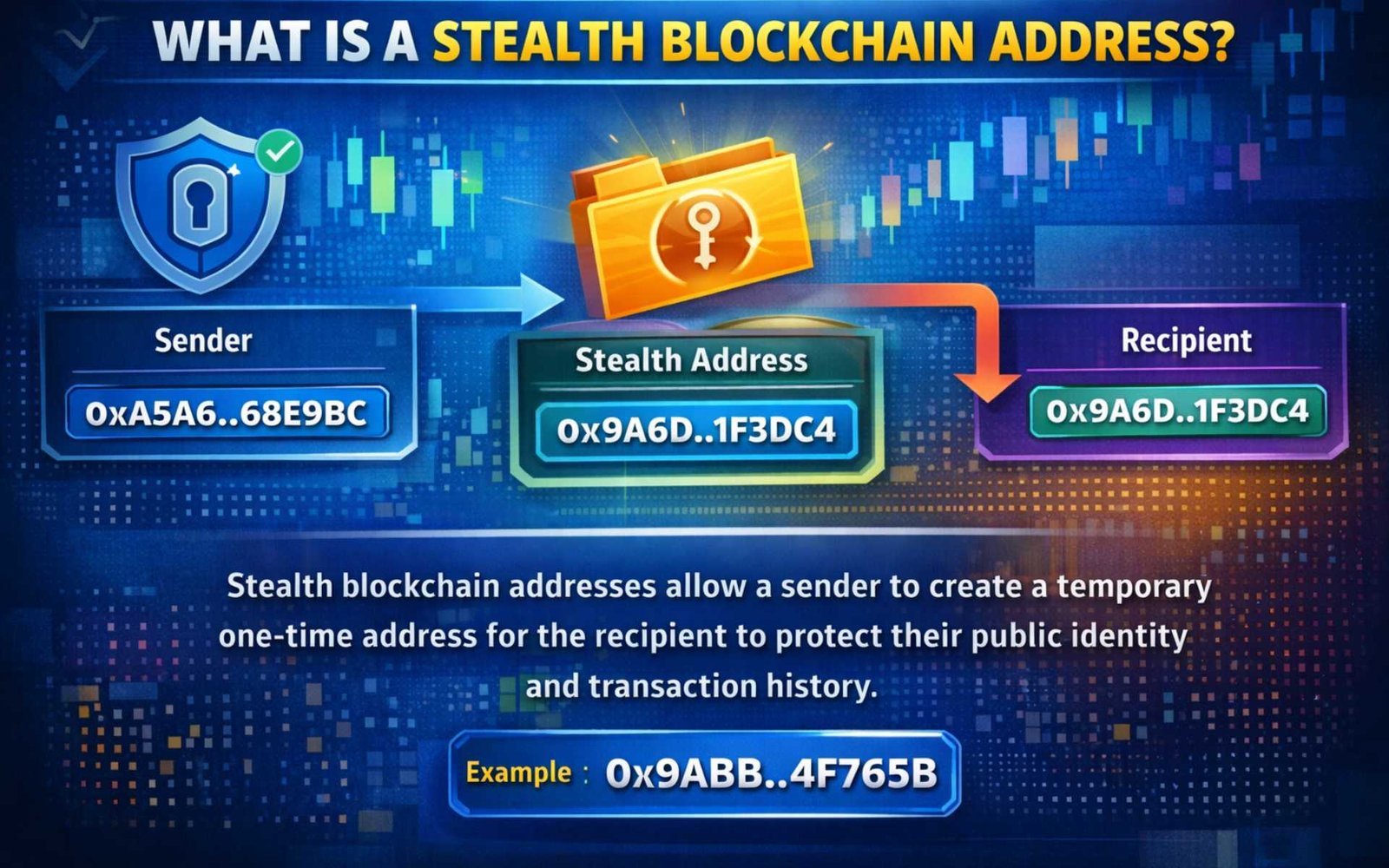
A stealth address is a temporary address meant to shield the receiver of the crypto from blockchain explorers.
Ethereum Resource for Comments, abbr. as ERC 5564, is an adopted Ethereum standard meant to create privacy-centric stealth addresses for end-to-end transaction encryption for Ethereum users.
It works by creating a temporary receiving address for the receiver to protect their public identity.
A stealth address is a temporary address meant to shield the receiver of the crypto from blockchain explorers. Once the temporary address vanishes, there is no trace of who has received the crypto.
Stealth Addresses are used to secure the privacy of the receiver. Once a crypto transaction is over, it is impossible to trace who received the crypto because the initial (temporary) address no longer exists.
When a user is about to send cryptocurrency to someone, they set a stealth address for the receiver. The receiver receives the crypto from the sender via this address.
At the end of the trasactions the temporary address is discarded. Since the crypto was sent to this address and it is being defunct soon, it becomes almost impossible to trace the receiver of the crypto.
The address adds a layer of optional privacy for the users.
Stealth Addresses are needed in the current crypto landscape because of a lot of reasons.
Currently, Ethereum follows the standard blockchain privacy, where anonymously held addresses are used to send and receive cryptocurrencies.
The problem is that several blockchain analytics firms and investigating companies have been able to identify people and their addresses, even if the end user does not want to be shown. This amounts to a gross violation of privacy.
Below is a report from Arkham Intelligence showing the assets held by Justin Sun.

ZCash uses optional privacy, where shielded addresses are used to privatize crypto transactions. These shielded addresses rely on Zero Knowledge protocols to only submit a summary of transactions of a block and omit individual transactions.
Monero uses RingCT signatures to first disperse a single crypto transaction into multiple ones and mix it with others in the memory pool, then the crypto from these mixed batches is sent to the receiver.
Read More: Is ERC-20 the same as ETH?
Dubai had banned privacy tokens in 2026. However, now that Ethereum has introduced private addresses to its blockchain, it would be impossible for it to ban ETH given its central role in cryptocurrency and blockchain technology. So, we think, Dubai won’t ban Ethereum despite the adoption of stealth addresses.
Das Crypto publishes information for knowledge. Please consult your financial advisor before trading or making any investment decisions. Cryptocurrencies are subject to uncertainties and market volatility.


